

Contents
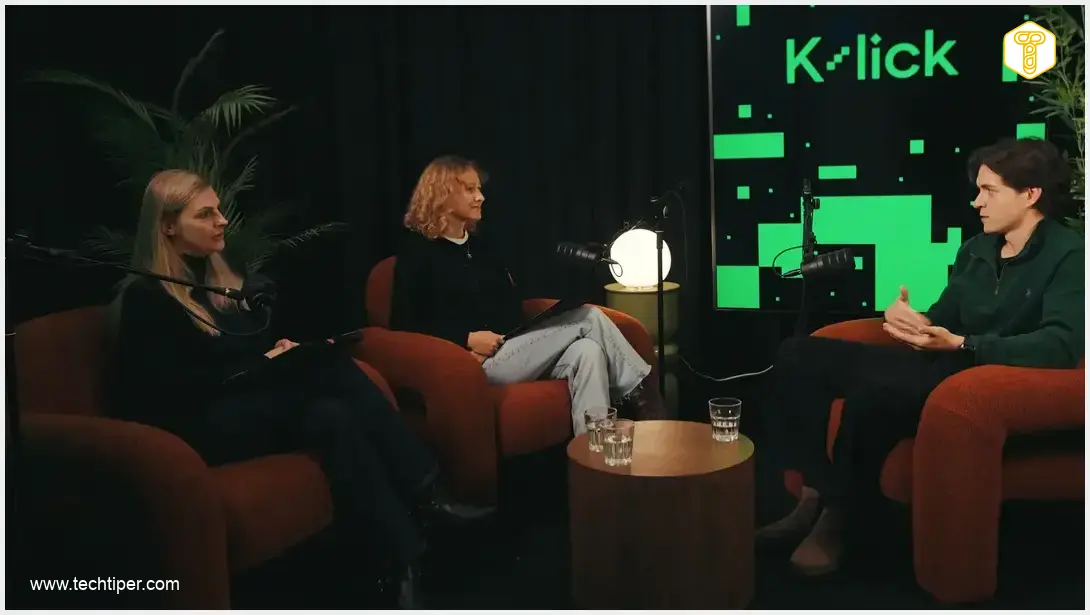
Nikodem Rudziński on the K-lick Podcast: The Future of Unobtrusive Technology
“It’s still an abstraction for now, but I dream of technology that allows skills to be uploaded directly into one’s head. On a more accessible note, self-driving cars would definitely make my life easier.” This thought-provoking statement comes from Nikodem Rudziński, widely known online as “Szhakal,” as we delve into the world of technology that increasingly demands less of our attention in the latest K-lick podcast episode.
What Propels Modern Technology?
What drives the development of technology that operates seamlessly in the background, yet offers a high degree of personalization? The undeniable boom in artificial intelligence certainly fuels this progress. However, what’s intriguing and somewhat paradoxical is that it’s also propelled by a growing societal nostalgia for analog solutions – a longing for simplicity, for systems that were maximally straightforward and didn’t require navigating countless functions and options.
This is one of the insightful observations shared by our guest on the newest K-lick podcast episode, partnered by Leapmotor, a manufacturer of electric passenger vehicles. Joining us in the studio was Nikodem Rudziński, also known as “Szhakal,” an internet content creator and entrepreneur dedicated to popularizing knowledge about AI and modern technologies online.
Ubiquitous Technology, Yet Increasingly Unobtrusive
Our conversation with Nikodem Rudziński explored a fascinating trend: technology isn’t disappearing from our daily lives; rather, it’s becoming less attention-grabbing. As the expert emphasized, modern solutions don’t constantly ask users for input; instead, they proactively assist with repetitive tasks, delivering an experience of hyper-personalization. This shift means technology is moving towards anticipating our needs rather than reacting to our commands, fundamentally changing how we interact with the digital world. This evolution suggests a future where traditional apps might even fade into the background.
“I’m a gadget enthusiast, and I’m fascinated by solutions that blur the lines between online and offline,” Nikodem confessed. “Manufacturers are already thinking about what could replace the smartphone in the future. Smart glasses are an excellent example of technology working in the background. We wouldn’t need to constantly pull our phones out of our pockets, get distracted, scroll, tap, and then try to return to reality.”
We asked our guest what distinguishes truly personalized technology. The interview also touched upon current and future solutions within device ecosystems, the Internet of Things (IoT), and ambient computing. We pondered how the aforementioned nostalgia for an analog world plays a role in this technological paradigm shift. Ambient computing, for instance, refers to a world where computing is seamlessly integrated into our environment, responding to us without explicit commands.
The Car as a Digital Tool
Technology that discreetly learns our behaviors isn’t exclusive to various gadgets; it’s also a significant aspect of the latest automotive innovations. Nikodem Rudziński agrees that today’s car can indeed be considered a digital tool. He solidified this conviction while recently testing the hybrid Leapmotor B10 model.
“One large screen and very few buttons. From the moment I stepped into that car, I felt a sense of the future. The most important functions are prominently displayed, while more advanced features are cleverly hidden yet intuitively accessible,” the internet creator shared, highlighting a design philosophy that prioritizes user experience over complexity. The integration of advanced AI and digital tools, much like integrating ChatGPT with Apple CarPlay or Android Auto, is transforming the in-car experience.
Our interviewee also drew attention to the power of choice. As a simple example, Nikodem Rudziński mentioned the option of using either a phone or a card to open the Leapmotor B10. If one method fails or is lost, the other option remains available. This thoughtful design underscores a crucial principle: good technology, even when it unexpectedly falters, should always provide a backup, ensuring users are never left stranded.

Frequently Asked Questions (FAQ)
Unobtrusive technology refers to systems and devices that operate seamlessly in the background, anticipating user needs and performing tasks without constantly demanding direct interaction or attention. Instead of requiring users to pull out a device or navigate menus, this technology works intuitively, often in an “ambient” way, to simplify daily life.
Artificial Intelligence is a primary driver behind personalized and unobtrusive technology. AI algorithms enable systems to learn user behaviors, preferences, and contexts over time. This learning allows technology to offer hyper-personalized experiences and automate repetitive tasks, making interactions more seamless and less demanding of human attention.
The nostalgia for analog solutions stems from a desire for simplicity and less cognitive load. While modern technology offers immense capabilities, the sheer number of options and constant notifications can be overwhelming. The appeal of analog lies in its straightforwardness, reduced complexity, and ability to focus on one task without digital distractions, creating a paradoxical drive in technology design to make complex systems feel simpler.
Source: Our own work. Opening photo: Editorial Team.
About Post Author
