

Contents
From “Trash” to Treasure: Norwegian Man Unearths Ancient Artifact with Metal Detector
In a surprising turn of events in the Norwegian municipality of Bodø, a 46-year-old man stumbled upon a historical artifact he initially mistook for… ordinary trash. This enigmatic object has since been identified and is soon to be transferred to one of the national museums in Tromsø, captivating archaeologists and history enthusiasts alike.
A “Piece of Junk” Nearly a Thousand Years Old
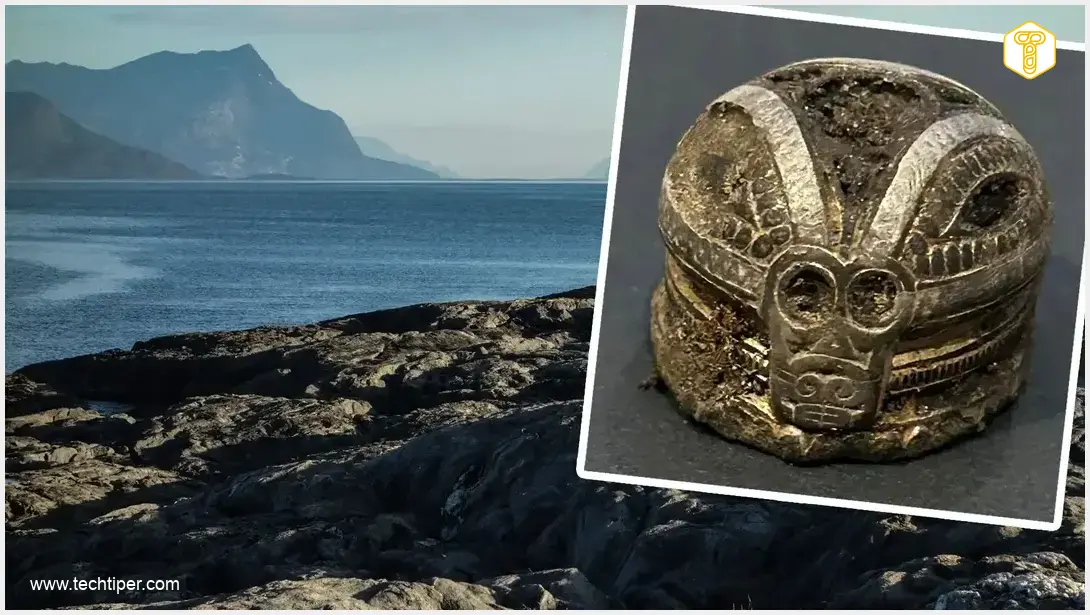
Tom Erlend Christensen, a 46-year-old Norwegian, was exploring the Bodø area with his metal detector when he encountered a mysterious item. His initial assessment led him to believe it was merely a broken light bulb fitting. However, his perspective shifted dramatically when he noticed intricate patterns, decorations, and even a precious stone embedded within its surface.
Unraveling the Mystery: Archaeological Insights
The object quickly came into the possession of archaeologists from the Nordland County Council. Their preliminary findings suggest the artifact could date back as far as the Viking or Iron Age. Crafted from a distinctive blend of copper and silver, experts believe it was likely a component of a much grander, more elaborate item, hinting at a rich history and sophisticated craftsmanship from ancient times.
The artifact has been officially registered and is anticipated to be moved to the Arctic University Museum of Norway in Tromsø. According to Norwegian law, all archaeological finds predating 1650 must be surrendered to the state. However, both the finder and the landowner are entitled to receive compensation for their valuable contribution to cultural heritage.
When asked about his unexpected discovery, Christensen expressed that monetary gain was not his primary motivation. He stated that the statutory gratification was entirely sufficient, emphasizing his lifelong passion for exploration, a hobby he has pursued since childhood.
Norway: A Treasure Trove of Historical Finds
Interestingly, this recently discovered artifact is just one of several remarkable archaeological finds to emerge from Norway in recent times. Not long ago, near the city of Rena, two researchers unearthed an astonishing hoard of 5,200 silver coins. This discovery currently holds the record as the largest known monetary treasure ever found within the country.
The coin excavation, however, faced a unique challenge. Work had to be temporarily halted because the field containing the treasure had been sown with crops. Archaeologists patiently awaited the harvest season before resuming their efforts, underscoring the often unpredictable nature of historical fieldwork.
The thrill of such discoveries highlights the ongoing fascination with ancient civilizations and the dedication of those who seek to uncover their secrets. From individual metal detectorists like Tom Erlend Christensen to professional archaeological teams, each find contributes to our understanding of the past.
For more stories on historical discoveries, you might be interested in this captivating account of a treasure hunter unearthing shipwreck gold, or perhaps delve into how history influences modern design with a look at the new Opel Astra and its 64-year-old great-grandfather.

Frequently Asked Questions (FAQ)
In Norway, any archaeological find dating before 1650 is considered state property. You are legally obligated to report such discoveries to the relevant archaeological authorities, usually the county council or a museum. The finder and landowner are typically entitled to compensation.
Archaeologists use a variety of methods for dating and identifying artifacts, including stylistic analysis, material composition (e.g., metallurgy of copper and silver in this case), stratigraphic context (the layer of soil it was found in), and scientific techniques like radiocarbon dating for organic materials or thermoluminescence for ceramics.
Norway’s rich history, particularly during the Viking Age, coupled with its unique geography and climate, contributes to the preservation of many artifacts. The increasing popularity of metal detecting, often by enthusiastic amateurs working in cooperation with authorities, also plays a significant role in uncovering previously hidden historical treasures.
Source: TV2
Opening photo: Vojife / Magnific, Norges Metallsokerforening / screenshot, self-edited
About Post Author
