

October marked the annual return of the region’s largest exhibition dedicated to high-end audio and video equipment: the Audio Video Show. This three-day event offers a unique opportunity not just to examine the latest technological advancements up close, but crucially, to experience their sound firsthand and engage with the innovators behind their creation.
Contents
Audio Video Show: A Unique Hands-On Experience
Each year, the Audio Video Show attracts audio systems ranging from several thousand Euros to well over 2 million Euros. It stands as a singular venue where visitors can discover speakers, amplifiers, turntables, and players priced like luxury city apartments, alongside more accessible options for enthusiasts with varying budgets. During the event, I had the privilege of auditioning systems such as the Wilson Audio Autobiography, valued at approximately €2 million, and the Acapella Sphäron Excalibur, priced around €1.6 million, among numerous other devices with six-figure price tags.
It’s no surprise that organizers aptly compared the Audio Video Show to exclusive automotive exhibitions. While car shows often limit interaction with supercars to viewing from a distance, this event offers the complete opposite experience. Over three days, I had the unique chance to “take many of these systems for a spin.” Which ones left the most lasting impression?
Perfect 8 Cube-T: Redefining Room Acoustics
Anyone with a Hi-Fi setup knows the challenge of optimally arranging everything in a living space to achieve the desired sound. Room reflections, asymmetrical layouts, or imperfect soundproofing significantly impact audio quality. While modern calibration tools are more advanced than ever, the process remains meticulous and demanding.
Imagine walking into a room where a speaker is positioned sideways, firing directly into a wall, yet the quality, clarity, and dynamics of the sound are utterly breathtaking. This is precisely the effect achieved by the Cube-T, Perfect 8’s latest pair of loudspeakers. Their “omnidirectional” design means you simply need to place them reasonably equidistant from walls, and no additional equalization is necessary. It’s worth noting that most woofers and subwoofers are not designed to fire directly at the listener.
During the exhibition, I had the chance to speak with a company representative and listen to some of my favorite tracks on this system. I must admit, the quality they achieved in a small hotel room was genuinely impressive. Even though these speakers are still incredibly expensive (around 60,000 Euros), I can envision someone truly dedicated to sound quality making such an investment. Not only do the speakers sound remarkable, but their aesthetic appeal is also undeniable; their glass and titanium construction lends them a timeless design.
Treble Clef Audio TCA-M: Cementing Sonic Excellence
Can a speaker be made from cement? Treble Clef Audio answered with a resounding “yes,” and the outcome of this experiment left me in awe. Coincidentally, I had just purchased Warlock’s latest album, “Triumph and Agony,” from a record stall. One of the unique aspects of the Audio Video Show is the ability to audition your own recordings on equipment that would otherwise be inaccessible. This was one such occasion.
As soon as I heard the opening notes of “All We Are,” I was speechless. Every drum beat resonated like thunder, yet the system maintained immense dynamics, fast bass, and brilliant clarity. While the original 1987 vinyl mix certainly played a role, the difference between how the track sounded at the exhibition and, for instance, on my home setup, was colossal. I later listened to it on excellent TWS headphones, but there, it felt like a mere shadow of the experience delivered by the Treble Clef system. While internal sound cards like the Sound Blaster Audigy FX Pro offer significant upgrades for desktop listening, they cannot recreate the profound immersion of a dedicated high-end system.
The TCA-M combines exceptional sound with a unique appearance. The aforementioned cement-based synthetic foam effectively dampens vibrations from the omnidirectional 12-inch Acoustic Elegance drivers, which are paired with a 5-inch woofer and a 1.1-inch tweeter from Scan-Speak. All of this is integrated into a distinctive treble clef design, making it one of the most visually striking Hi-Fi constructions I’ve ever encountered.

écoute audio TH2 Headphones: Tube Warmth on the Go
The Hi-Fi world has been undergoing a shift in perspective. It’s now widely accepted that the inherent characteristics of tube amplification largely contribute to its “colored” sound. Instead of trying to eliminate this, an increasing number of products embrace it as their primary advantage.
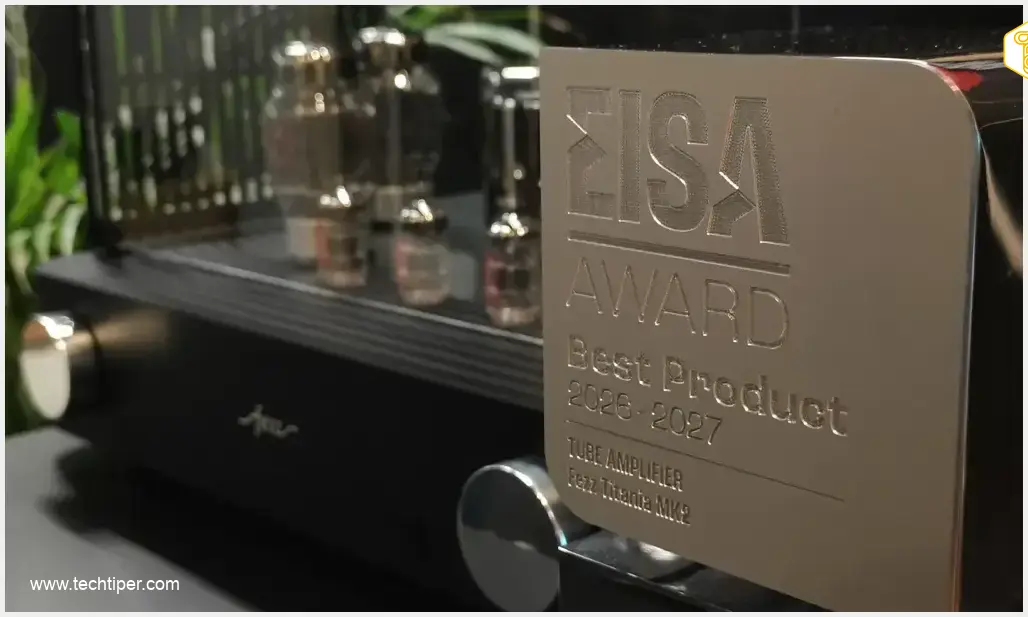
Among the leading brands in tube-based designs are Polish manufacturers like Fezz (whose Fezz Titania MK2 amplifier won the prestigious EISA Award Best Product 2026-2027) and Lampizator. However, this year, an absolute novelty captured my attention. The Audio Video Show unveiled the world’s first headphones with an integrated tube preamplifier.
I had the opportunity to discuss the design philosophy with a brand representative at the show. Their goal wasn’t a synthetic, analytical sound; quite the opposite. These headphones were engineered to maximize the warmth of the low-midrange, and it’s distinctly audible. I listened to several tracks, including Geoff Castellucci’s often-heard rendition of “Sound of Silence,” and I was incredibly impressed by their character. For those looking for high-quality audio on the go, products like the Nothing Ear (A) headphones offer impressive portability, but for a truly unique and warm listening experience, the écoute audio TH2 stands out.
This is my personal opinion, but I found them far more appealing than several planar models, some many times more expensive, available in the event’s headphone zone. Crucially, planar models typically require an additional amplifier, whereas the écoute audio TH2 can be plugged directly into a smartphone, offering unparalleled convenience for high-fidelity portable listening.
Qobuz: A Niche Approach to High-Quality Music Streaming
When discussing headphones that connect to smartphones, it’s essential to mention the event’s technological partner, Qobuz, which is now entering new streaming markets. Its primary distinguishing features are a 100% commitment to the highest quality music (up to 24-bit/192 kHz), an enormous collection (over 100 million songs), and the option to purchase tracks for permanent ownership (though this feature’s availability varies by region).
Furthermore, Qobuz playlists are curated by local teams, not algorithms, and the service offers a wealth of additional content, such as articles and galleries, related to your favorite artists. During the exhibition, I had the pleasure of speaking with Georges Fornay, Deputy CEO of Qobuz, who visited for the occasion.
Qobuz’s Market Strategy and Unique Value Proposition
I inquired about Qobuz’s strategy for attracting users, especially considering that many people globally already use streaming services.
Georges Fornay: “Firstly, we are not a mass-market service, and we don’t pursue a mass-market strategy. We are not seeking millions of clients. We focus on a specific niche and prioritize quality. We strive for differentiation. Our clients are typically slightly older, around 40, with greater purchasing power, and often reside in major cities. We concentrate on quality, audiophiles, enthusiasts, and collectors. Therefore, we target a different demographic. Spotify and other services cater to the mass market, where rap, hip-hop, and similar genres dominate the charts. In contrast, classical music accounts for 17% of streams on Qobuz, while it’s only 2–3% across the broader music market.”
“Our users approach and listen to music differently. We aim to convince them with sound quality, of course, but also with a holistic experience – including comprehensive articles about music. If you listen to The Beatles or another artist, you’ll find extensive materials about the track, album, artist, their statements, views, interviews, and so on. We have 700,000 articles – that’s a significant amount. You won’t find such content on other platforms. The values we uphold, which I describe as a conscious approach, are also crucial.”
“Younger generations, at least in Western countries, are very sensitive to these issues; I believe this will become increasingly important globally. This includes fair compensation for artists. I mentioned album booklets – we are the only service that offers them. It’s challenging because the content needs to be digitized and prepared manually. Imagine doing that for 100 million tracks. In summary: We are not trying to capture 10% of all users. We want to serve our niche market.”
When asked about future market share projections, Fornay explained: “If we gain a few percent, that’s enough for us. We are patient. We are only just entering new markets. You’ve seen that the streaming market has roughly doubled in the last five years. I believe it will double again in the next five years. Currently, many markets are comparable in size to the Swedish market. We launched in Sweden five years ago, so we can compare similar markets. In these regions, per capita music spending is around $8. This allows us to compare market potential; in this regard, we are slightly below Switzerland.”
“Value is what matters. Spotify has over half a billion users who don’t pay for music. They generate less than $5 per year per user. Our ARPU (Average Revenue Per User) is 135 Euros. One Spotify user on an ad-supported plan generates far less revenue for their company than a paying Qobuz customer. 30 million ad-supported Spotify users are equivalent in revenue to approximately 1 million paying Qobuz users.”
Future Outlook: Spatial Audio and Market Position
I then asked about Qobuz’s plans regarding features like spatial audio or Dolby Atmos, often found in competing services like Tidal and Apple Music, especially given their appeal to home theater enthusiasts.
Georges Fornay: “Currently, our clients don’t frequently inquire about spatial audio. If we need it in the future – for example, due to a partnership in specific markets or demand from electric car manufacturers – we can introduce it. However, our current clients focus on traditional stereo listening. Audiophiles, at least for now, are not demanding spatial audio.”
“We are flexible, but we don’t have the resources of Spotify. We don’t employ seven thousand people, so we must concentrate on what’s important. This is precisely why we continue to thrive. Most of our competitors have, to some extent, disappeared from the market. Germany’s IDAGIO, focused on classical music, is facing difficulties. Primephonic was acquired by Apple. In the download market, the US-based HDtracks is also struggling – according to data I’ve seen, its revenues have halved. Anghami in the Middle East and Africa reported a loss of $60 million last year, with revenues similar to ours. We are one of the few companies that can sustain itself in this segment.”
“Deezer is slightly larger than us, but still doesn’t match the biggest players. Consider the difference: Qobuz has had 75 million in investments. This is minuscule compared to Spotify, which received 7 billion, or Deezer, which saw 700 million in investments. However, our shareholders have been patient. We must, therefore, remain focused on our distinct niche strategy. We shouldn’t simply copy competitor solutions.”
JBL Summit Everest: A Behemoth of High-Fidelity Audio
Finally, one of the most significant surprises of the Audio Video Show, especially for those unfamiliar with JBL’s broader endeavors. The brand is primarily known for its portable speakers and accessible audio equipment. However, few realize that the Samsung-owned conglomerate also includes brands like Harman Kardon, AKG, Bowers & Wilkins, Denon, and Marantz in its portfolio. Consequently, it boasts engineers who are among the best in their field.
The result of this expertise is the JBL Summit Everest—a true titan, there’s no other word for it. Each speaker weighs a staggering 250 kilograms (550 lbs), and with transport packaging, the weight climbs to half a ton. With a recommended power of 1200 watts, it can generate 126 dB, close to the volume produced by a jet engine taking off.
During the exhibition, it delivered an incredibly pleasant performance, paired with Mark Levinson 600 series equipment. I deeply regret not having the opportunity to play my own music on it; though perhaps it was for the best, as I might have started worrying about the structural integrity of the venue itself!
Frequently Asked Questions (FAQ)
Omnidirectional speakers distribute sound in all directions, creating a more enveloping soundstage that is less affected by room reflections and traditional speaker placement challenges. Unlike conventional speakers that require precise angling and equalization, omnidirectional designs like the Perfect 8 Cube-T can deliver exceptional clarity and dynamics even when placed unconventionally, simplifying setup while maintaining high fidelity.
Qobuz targets audiophiles and serious music enthusiasts by offering uncompromised high-resolution audio up to 24-bit/192 kHz. Their niche strategy focuses on attracting users who prioritize sound quality, rich editorial content (articles, interviews), and artist compensation over mainstream convenience or lowest price. This approach allows them to cultivate a dedicated user base with higher average revenue per user, distinct from mass-market streaming services.
Tube (or valve) preamplifiers are renowned for imparting a “warm” and rich sonic character, particularly in the low-midrange frequencies, which many audiophiles find highly appealing. The écoute audio TH2 headphones integrate this technology to deliver a distinct, engaging sound that is less analytical and more musically inviting, directly from a portable device like a smartphone, bypassing the need for external amplification.
The Audio Video Show provides an unparalleled opportunity for enthusiasts to not only view but critically listen to ultra-high-end audio equipment that is otherwise inaccessible. Unlike typical exhibitions, visitors can experience the sound of systems costing millions, interact with experts, and even audition their own music on these world-class setups, offering a hands-on, immersive experience that transcends mere observation.
Source: Original article by Krzysztof Rojek. Opening photo: Krzysztof Rojek.
About Post Author
