
Contents
Scammers Exploit Black Friday: Beware of Fake SMS Messages
Are you eagerly awaiting a package ordered during a major shopping event like Black Friday? Be extremely cautious of fraudulent SMS messages impersonating courier services like DHL. Scammers are sending fake notifications about delayed deliveries, asking you to confirm your address, and then attempting to steal your payment card details.
The Deceptive Courier SMS: A Black Friday Trap
Major shopping events create a perfect storm for cybercriminals. With stores offering tempting promotions, customers placing countless orders, and courier companies operating at peak capacity, it’s easy to fall for a message claiming an address error has caused delivery issues.
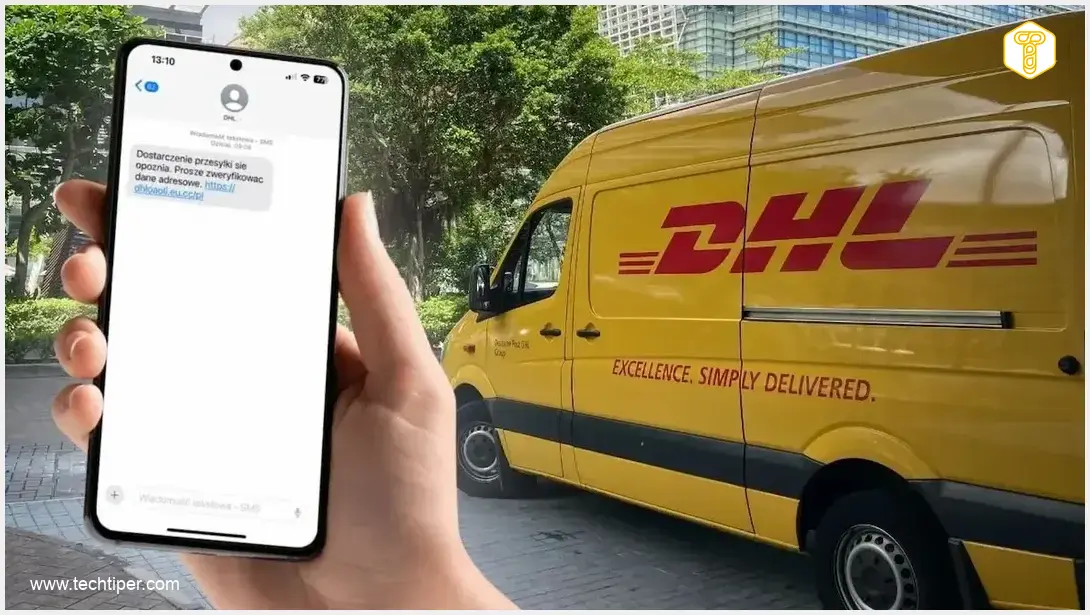
This vulnerability is precisely what scammers, often impersonating reputable couriers such as DHL, exploit. They send SMS messages informing recipients of a delivery delay and the need to confirm address details. To “resolve” the problem, victims are instructed to click a link embedded in the message.
Fake Courier Demands a Small Fee for Redelivery
The deceptive link typically leads to a website with an address that attempts to mimic a legitimate courier site (e.g., “dhloaoli.eu.cc”). A critical red flag should immediately appear: official company websites use their legitimate domain (e.g., www.dhl.com). However, amidst the excitement of online shopping, a moment of inattention can lead to serious consequences.
Upon landing on the fake site, which often looks strikingly similar to the genuine one, users are prompted to fill out a form with their address details. Following this, they are asked to select a new delivery date. The final step involves paying a nominal redelivery fee, often around 3.99 units of currency.
This is where unsuspecting victims fall into the scammers’ trap.
The Real Danger: Your Payment Card Details
To complete the “payment,” you are required to enter your payment card details: the card number, expiry date, and CVV code. While it might appear to be a standard online payment process, it is, in reality, a sophisticated attempt to steal your confidential financial information.
The risk isn’t just losing a small redelivery fee; it’s handing over your complete payment card data to criminals. They can then use this information to make unauthorized transactions, or, in the worst-case scenario, drain all funds from your account. For more information on similar threats, you can read about urgent alerts regarding banking malware and security tips.
How to Identify Phishing and Smishing Scams
The mechanism described above is a classic example of phishing – where scammers use the name of a well-known company within a web address, hoping victims will believe the site is genuine. In these cases, the company name (e.g., “dhl”) is merely part of a subdomain name that does not belong to the official courier company.

It’s crucial to remember that even the presence of a padlock symbol and “HTTPS” in the URL does not guarantee a website is safe; it only indicates that the connection is encrypted. Scammers often secure their fake sites with SSL certificates to appear more legitimate.
Criminals also leverage time pressure. They inform you of a delivery problem that needs immediate resolution. The seemingly small redelivery fee is designed to further lower your guard. This is a classic example of “smishing,” a form of phishing that uses deceptive SMS messages to trick individuals into revealing personal information. These tactics often exploit urgency and curiosity, similar to what you might find in scareware and fake security alerts.
What Happens if You Provide Your Card Details?
If you enter your card number, expiry date, and CVV code on a fraudulent website, these details immediately fall into the hands of criminals. They can then use this information to carry out unauthorized online payments.
While many transactions require additional confirmation through a banking app or SMS code, not all are secured in the same way. Scammers may even try to trick you into providing such confirmation, claiming it’s necessary to process the “delivery payment.”
Therefore, before approving any transaction, always verify the amount and the recipient. If your banking app displays a different sum than the promised redelivery fee, it should instantly raise your suspicions.
Received a Suspicious SMS? Here’s What to Do
If you receive a suspicious SMS message, follow these essential steps:
- **Do Not Click the Link:** Absolutely avoid clicking on any links or providing any personal or financial information.
- **Verify Directly:** If you are genuinely expecting a package, check its status using the official courier’s app or website. Type the official URL directly into your browser; do not rely on links from SMS messages.
- **Report the Scam:** Forward the suspicious message to your country’s national cybersecurity incident response team or equivalent authority. For example, in many regions, you can forward scam texts to a dedicated number (e.g., 7726 in the US and UK). Specialists can analyze these reports and take action to block dangerous websites.
- **Act Immediately if Compromised:** If you have already entered your card details, contact your bank immediately to report the fraud and have your card blocked. Review your transaction history for any unauthorized activity and report anything you don’t recognize.
Frequently Asked Questions (FAQ)
Look for red flags such as unusual sender numbers, grammatical errors, generic greetings (e.g., “Dear customer”), requests for personal information or payment via a link, and discrepancies in the URL (e.g., not ending in the official domain like .com or .net). Always check the tracking number on the official courier website by typing the URL yourself.
Shopping events like Black Friday create a heightened sense of urgency and expectation. Many people are awaiting packages, making them more susceptible to deceptive messages about delivery issues. The sheer volume of transactions and deliveries provides excellent cover for scammers to blend in with legitimate communications.
No. While HTTPS indicates an encrypted connection, making it harder for others to intercept data, it does not guarantee the website’s legitimacy. Scammers often use SSL certificates on their fake sites to make them appear more trustworthy. Always check the domain name carefully, even if you see a padlock.
If you clicked a suspicious link but did not enter any personal or financial information, you are likely safe. However, it’s still advisable to clear your browser’s cache and cookies, and run a full scan with reputable antivirus software on your device to ensure no malicious software was inadvertently downloaded.
Source: Own work. Opening photo: Courier company / press materials, screenshot, own montage.
About Post Author
