

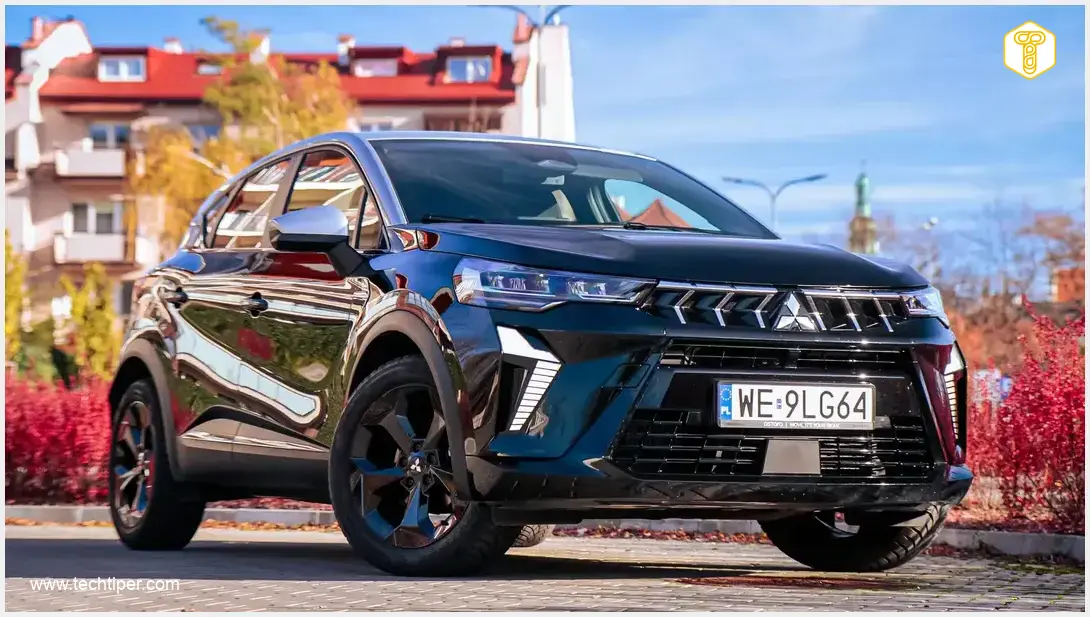
Mitsubishi ASX Black Edition (M Hybrid) Review
-
Pricing & Value
-
Performance & Powertrain
-
Interior & Ergonomics
-
Infotainment System
-
Boot & Practicality
-
Driving Dynamics & Handling
-
Fuel Consumption
-
Driver Assistance Systems
Mitsubishi ASX Black Edition: Agile, Practical, and Well-Warranted Urban Crossover
The Mitsubishi ASX Black Edition offers a pleasant and agile driving experience with a practical interior and an impressive warranty package. While its infotainment system can be sluggish and the suspension firm, it stands out for its cargo versatility and sensible MHEV powertrain.
Advantages
- Pleasant, lively, and agile driving character.
- Highly practical interior with physical buttons.
- Exceptional boot capacity thanks to sliding rear bench.
- Robust 8-year factory warranty.
- Smooth and fuel-efficient 1.3L M Hybrid engine.
- Good base audio system quality.
Disadvantages
- Pricing can be high compared to some rivals.
- Infotainment system can be sluggish without full Google Services.
- Prevalence of hard plastics in the cabin.
- Firm suspension might not suit all preferences.
- Average interior sound insulation at higher speeds.
- Basic suite of driver assistance systems in Black Edition.
Contents
Mitsubishi ASX Black Edition Review: Style Meets Practicality – Is It the Right Urban Crossover for You?
We’re diving into a comprehensive review of the Mitsubishi ASX in its special Black Edition trim. This variant is designed to accentuate the model’s aesthetics with contrasting styling elements and a slightly enhanced feature set. While it’s no secret that this generation of the ASX shares its underpinnings with the Renault Captur, the Japanese brand is making an effort to carve out its own niche in the competitive market. Let’s take a closer look and see what it has to offer.
Pricing, Trims, and Value Proposition
The Mitsubishi ASX is positioned as an urban crossover, available with two powertrain options and across five distinct trim levels, offering a good range of choices for potential buyers. Here’s a breakdown of the available configurations and their approximate pricing (in local currency units):
Engine Options and Trim Levels:
- 1.2L Petrol (6-speed manual, 115 HP):
- Inform: Approximately 101.3 thousand units
- Invite Plus: Approximately 115.8 thousand units
- 1.3L M Hybrid (MHEV, 7-speed automatic, 140 HP):
- Invite Plus: Approximately 125.8 thousand units
- Black Edition: Approximately 127.3 thousand units
- Intense+Cold: Approximately 133.3 thousand units
- Instyle+Cold: Approximately 145.3 thousand units
It’s important to note that at the time of this review’s publication, a significant discount of up to 13 thousand units of local currency was available, which should be factored in when comparing the ASX against its rivals. The specific features for each trim level vary, offering different levels of comfort, technology, and styling.
Warranty and Ownership Costs
Mitsubishi offers a robust warranty package for the ASX: an 8-year warranty with two mileage limits. For the first 5 years, coverage extends up to 100,000 kilometers (approximately 62,000 miles), and for the full 8 years, it covers up to 160,000 kilometers (approximately 99,400 miles). Additionally, there’s a 12-year anti-perforation warranty and a 5-year warranty on the paintwork.
Insurance costs can vary significantly based on location and driver profile. For a driver with several years of experience, basic liability insurance for the ASX might be around 720 units of local currency, while a comprehensive package including collision coverage could be around 3,600 units. It’s always recommended to get personalized quotes.
Our tested Mitsubishi ASX was the Black Edition (MHEV) variant, which starts at approximately 127.3 thousand units of local currency (before discounts). The only optional extra available in the configurator was the paint finish (4 thousand units for Onyx Black/Silver). This brought the final price to 131.3 thousand units, or 118.3 thousand units after applying the available discount.
Technical Specifications and Dimensions
Under the hood, the ASX offers two petrol engine choices: a 1.2-liter 3-cylinder unit producing 115 HP, or a 1.3-liter 4-cylinder MHEV (Mild Hybrid Electric Vehicle) delivering 140 HP. While the power difference might not seem substantial on paper, it translates into a noticeable improvement in performance, with the 140 HP version reducing the 0-100 km/h (0-62 mph) acceleration time by 3 seconds. Crucially, this performance boost doesn’t come with a significant increase in fuel consumption, and the larger engine offers a more refined operating experience.

Despite the addition of mild-hybrid technology, the boot capacity remains uncompromised. Mitsubishi quotes the smallest possible boot volume, but thanks to the sliding rear bench seat, you can gain over 100 liters of additional space. For a city car in this segment, the overall cargo capacity is very respectable. The ASX also boasts a surprisingly spacious cabin for its exterior dimensions.
A Brief History of the Mitsubishi ASX
The ASX (Active Sports Crossover) model line has an interesting lineage. The first generation, introduced in 2010, shared styling cues with other Mitsubishi models like the Lancer and offered a wide range of powertrains, including all-wheel drive. Over time, it underwent three significant facelifts (2012, 2016, and 2019), which gradually softened its styling. Interestingly, the first-generation ASX also served as the basis for badge-engineered siblings like the Peugeot 4008 and Citroën C4 Aircross. Production of the first-generation ASX continues in some markets, though not for Europe.
The second-generation ASX, launched in 2023, represents a complete departure. Built on the CMF-B platform, it is a twin model to the second-generation Renault Captur, which debuted in 2019. This new ASX is actually smaller than its predecessor. Consequently, it received a parallel refresh with the Captur in 2024. Unlike Renault, Mitsubishi focuses on conventional powertrains, meaning there’s no Plug-in Hybrid option. The Black Edition styling package joined the lineup in 2026.
While the first ASX competed in the C-segment, the current second-generation Mitsubishi ASX is a B-segment crossover. Its closest competitor is naturally the Renault Captur, though manufacturers often differentiate their configurators, making it worthwhile to compare specific equipment needs. Other urban crossover rivals include the Skoda Kamiq, Hyundai Kona, Kia XCeed/Stonic, Opel Mokka, Jeep Renegade, Suzuki S-Cross, and Mazda CX-30, highlighting the diversity in this popular segment.
Infotainment System: Android-Based, But With Caveats
Given its Renault platform, the ASX comes equipped with an Android-based operating system. However, the level of functionality varies by trim. Only the top-tier Instyle+Cold variant includes full Google Services, meaning Google Maps and the Play Store are absent in our tested Black Edition. This particular platform can also feel a bit sluggish at times, with noticeable delays in certain operations. Fortunately, for most users, this won’t be a major issue, as many will primarily use Android Auto or Apple CarPlay.
Regardless of the system version, all ASX models feature the same central, portrait-oriented 10.4-inch touchscreen. The digital instrument cluster is a 7-inch display, with the exception of the highest trim, which gets a larger 10-inch panel. Premium features like a Harman Kardon sound system are also reserved for higher trims and were not present in our test vehicle.
Central Screen Experience
Overall, the Mitsubishi ASX’s software is user-friendly. Despite occasional performance hiccups, it’s a well-designed and organized system that effectively serves its purpose. While not exceptionally feature-rich, it does offer driver profiles. The interface features always-visible top (notifications) and bottom (climate control) bars. The main dashboard consists of horizontal widgets that can be customized. This is largely the extent of personalization for the system’s appearance. Tabs allow quick access to media, Android Auto/Apple CarPlay, a limited app list, or vehicle settings. A built-in voice assistant worth using was not found, though Google’s Gemini is available with Google Services. Mitsubishi also omits a built-in owner’s manual, a common trait for this platform, as Renault expects users to access information via their smartphones.
Climate control is exceptionally convenient, with physical buttons below the screen handling most functions. The central display only shows selected settings or allows activation of heated seats. Other comfort features are limited to basic settings for keyless entry and wiper operation, indicating that even in the Black Edition, the system prioritizes simplicity over extensive customization.
Being Android-based, the ASX offers comprehensive connectivity. Even without Google Services, it remains constantly connected to the internet, can join external Wi-Fi networks, or create a Wi-Fi hotspot. However, without the Play Store and the ability to freely install apps, its utility is somewhat limited. The standard ASX comes with 6 speakers. Higher trims upgrade to a 9-speaker Harman Kardon system with a subwoofer. Surprisingly, the base audio system delivers impressive sound quality. It’s clear, lacks distortion, and offers pleasant bass. While it won’t offer an expansive soundstage, it’s remarkably good for an urban crossover.
Navigation and Smartphone Integration
Mitsubishi wisely avoided developing its own navigation system when Google Maps isn’t available, and that’s a good decision. Alternatives often fall short, especially when seamless wireless Android Auto and Apple CarPlay are available. Both platforms functioned flawlessly during our test.
Digital Instrument Cluster
The simplicity of the ASX’s software extends to its digital instrument cluster. It’s a familiar 7-inch panel found in other Renault-Nissan-Mitsubishi consortium models, offering a clear interface with well-executed visualizations. Drivers can cycle through three functional themes. The simplest focuses on speed, while others add a tachometer or a view of the driver assistance systems. A useful feature within the latter is a constant display of the distance to the preceding vehicle in seconds. Further customization includes scrollable side widgets, showing navigation directions (from Android Auto/Apple CarPlay), an eco-driving indicator, and basic trip computer readings.
Interior: Modern Ergonomics with Practicality in Mind
Stepping inside the Mitsubishi ASX, don’t expect lavish materials. The cabin largely consists of hard plastics, but they are well-assembled, ensuring no creaks or rattles during driving. Several practical solutions enhance cabin versatility. Crucially, a good number of physical buttons are present, which is always a plus for ergonomics.
The keyless entry system operates on proximity: the central locking unlocks as you approach and locks as you walk away. There are no sensors in the door handles; alternatively, the car can be locked/unlocked via buttons on the flat key fob.
First Row: Crossover Advantages
The ASX’s doors fully cover the sills, preventing dirt from getting on your clothing. The raised body also makes ingress and egress easy, showcasing well-thought-out design.
The door panels are almost entirely hard plastics, except for the armrest, which has a thin layer of soft material. The layout of controls is intuitive, with everything within easy reach. The door pockets offer acceptable storage space.
Comfortable Seating
The front seats in the Mitsubishi ASX are well-sculpted, providing surprisingly good lateral support in the backrest. The headrests extend unusually high and are substantial in size. Our only minor critique would be the length of the seat base, though shorter bases are typical for urban cars. Manual adjustments are basic, with only the driver’s seat offering height adjustment. Overall, both short and long journeys are comfortable thanks to the seat design. For colder weather, efficient three-stage heating is available. A significant plus for the ASX is the inclusion of ISOFIX anchors on the front passenger seat.
Steering Wheel: French-Inspired Convenience
The prominent Mitsubishi logo on the steering wheel subtly hides its Renault counterpart. Regardless, it’s a comfortable interface for the driver, with a well-sized, eco-leather rim that feels good in hand, featuring subtle contours. It offers manual two-way adjustment, but heating is only available in higher trims.
The large physical buttons on the spokes are convenient to use. The left cluster controls the cruise control, while the right manages the digital instrument cluster. Behind these, paddle shifters for the gearbox are present but feel somewhat superfluous for daily use, though they offer manual gear changes when desired.
A French-designed steering wheel also means a separate stalk on the steering column consolidating all multimedia controls. Those new to this setup will quickly find it intuitive and convenient.
To the left of the driver’s knee, a set of buttons allows for personalized driver assistance system settings. This is also where you’ll find the driving modes, primarily an “Eco” mode. On the opposite side, the engine start/stop button is located.
Dashboard: Practicality Meets Modernity
The dashboard design is appealing both aesthetically and ergonomically. Its overall simplicity is a strength. While the interior is dark, and silver inserts creak slightly when pressed, this is completely inaudible while driving. The top of the dashboard is even covered in a soft, rubberized material.
Speaker grilles are integrated into the A-pillars. On the passenger side, a driver attention monitoring system is present, operating discreetly and only engaging when truly necessary. The most prominent feature is the vertically oriented central display. Physical volume control buttons are located along its top edge. Below the screen, another set of physical controls provides full climate control operation, which is highly commendable for its convenience.
The center console begins with a storage compartment housing a wireless charging pad, two USB-C ports, and a 12V socket. Above these, another small storage space with a lip prevents items from sliding off. Further back, a simple gear selector is found.
Between the seats, a traditional handbrake lever is present. Higher trims offer an electronic parking brake and more storage space. Two cupholders are included, one of which can be covered by a sliding armrest. This armrest is rather firm, not height-adjustable, but still reasonably comfortable. Lifting it reveals a relatively deep but narrow storage compartment.
The headliner lacks grab handles but features a panel with interior lighting and the eCall system. The rearview mirror in our test ASX is not auto-dimming and offers basic rear visibility; auto-dimming is exclusive to the top trim. The glove compartment is impressively spacious.
Second Row: Best Suited for Children and Teenagers
Accessing the rear seats is easy, as the doors open wide and continue to cover the sills. The rear door panel mirrors the front, with only the armrest receiving a slightly softer covering. Naturally, the storage pocket is smaller.
We had no trouble fitting comfortably behind ourselves in the rear. It’s fair to say that individuals up to 1.9 meters (approximately 6 feet 3 inches) tall should find sufficient space, which is an excellent result for this class. The only minor inconvenience is the raised mounting rails for the front seats, meaning while feet fit underneath, they need to be kept close together.
While the Mitsubishi ASX’s second row is primarily designed for transporting children, adults can comfortably manage shorter to medium journeys. Amenities are limited to central air vents and ISOFIX anchors for two child seats. The sliding rear bench seat, offering 16 cm (approximately 6.3 inches) of adjustment, is a highly practical feature, allowing it to move almost flush with the front seats.
Lighting: Meeting Basic Expectations
Mitsubishi hasn’t extensively enhanced the ASX’s lighting, with no additional exterior light points. However, the headlights illuminate with pleasing animations when approaching the car. Projectors in the side mirrors are available on the highest trim. Inside, occupants will find moderately bright, warm-toned bulbs. No ambient lighting is present.
Boot: A Practical Surprise
The Mitsubishi ASX’s tailgate is manually operated, but well-damped struts make it easy to lift. However, loading items requires lifting them relatively high, especially when the boot floor is in its lower position.
The standard boot capacity is 484 liters. Thanks to the sliding rear bench seat, this can be expanded to an impressive 616 liters – exceptional for its class. Practicality is further enhanced by a dual-level boot floor. Folding down the 40:60 split rear seatbacks (no ski hatch) expands the total cargo volume to 1,596 liters, transforming the ASX into a small cargo carrier. A flat load floor is achieved when the adjustable floor is set to its higher position.
Convenience features in the boot are limited to two hooks. An accessory tow bar (with a homologated towing capacity of 1.5 tonnes) can be added.
Driving Impressions: An Agile Crossover Experience
Once you’ve adjusted the settings and become familiar with the ASX, you’ll find it a pleasant car to drive. While urban crossovers aren’t typically expected to offer thrilling dynamics, focusing instead on practical A-to-B transport, the Mitsubishi ASX genuinely impresses upon closer acquaintance. It feels composed and sure-footed. While not a sports car, its agility can be quite surprising.
This agility is particularly noticeable in the suspension, which is surprisingly firm, contributing to the car’s composed feel. Some drivers might even find the ASX to be more firm than soft. While it handles uneven surfaces without issue, taking them at lower speeds is advisable to minimize cabin impact. On the other hand, these settings allow for agile navigation through urban environments and excellent stability on highways.
The steering system is tuned to appeal to a broad audience. Maneuvering is effortless (turning circle: 11.1 m / 36.4 ft), thanks to light steering at low speeds. At higher speeds, the system subtly stiffens, providing sufficient precision. However, don’t expect sporty feedback or detailed road communication through the wheel.
Driving Dynamics: Better Than Expected Performance
Mitsubishi offers two turbocharged petrol engines for the ASX: a 1.2-liter 3-cylinder producing 115 HP (190 Nm, manual) and a 1.3-liter 4-cylinder MHEV with 140 HP (245 Nm, automatic). The 1.2-liter engine, also found in various Dacia models (e.g., Dacia Duster Tribrid), has average refinement, especially regarding vibrations. The more powerful 1.3-liter unit, however, is notably smoother in operation.
Official specifications claim the ASX M Hybrid accelerates from 0-100 km/h (0-62 mph) in 9.3 seconds, though some markets list 10.3 seconds. Our tests indicate the real-world performance is closer to the lower figure, around 9.5 seconds, even with winter tires and an ambient temperature of approximately 5 degrees Celsius (41°F).
The ASX offers two driving modes: Standard and Eco, switchable via a single button near the driver’s left knee. The difference primarily lies in throttle response and gearbox behavior. While not drastically different, the Eco mode does contribute to lower fuel consumption.
Digging deeper into the system settings reveals a “Freewheel” option, which is an accurate term for the gearbox’s coasting mode. When you lift off the accelerator, the transmission disengages, and the engine shuts off (in MHEV variants). This naturally results in a slight delay when power is reapplied. It takes some getting used to but is a feature that notably improves fuel economy, especially outside the city or when descending hills.
Overall, the 140 HP engine in the ASX is a very sensible choice. The less powerful 115 HP variant might feel somewhat underpowered, making the upgrade to the mild-hybrid system highly recommended. It’s a well-tuned powertrain that delivers smooth performance in all conditions, even encouraging revs to higher RPMs. While it doesn’t offer the instant torque of a pure hybrid or EV, it’s perfectly adequate for efficient daily urban driving and proved capable on longer trips and highways, handling overtakes and sudden maneuvers with ease.
If there’s a minor critique, it might be aimed at the gearbox. While it’s generally decisive and reasonably quick, dual-clutch transmissions can sometimes operate more smoothly. The shifts themselves are noticeable, not harsh, but some competitors manage gear changes with less perceived interruption. This is a minor quibble, as it didn’t significantly detract from daily driving. Disabling Eco mode offers a marginal improvement in shift smoothness.
Similarly, interior sound insulation is slightly above average. While the fit and finish are decent, and there are no rattles, external noises easily penetrate the cabin. This is particularly noticeable at higher speeds, where wind noise around the A-pillars becomes prominent, though still manageable with the audio system playing.
Mild hybrids don’t typically feature regenerative braking systems, and the ASX is no exception. An interesting point regarding braking is the use of drum brakes on the rear axle for lower trims; disc brakes are only fitted on the two highest trim levels. Despite this, we experienced no issues with braking performance.
Fuel Consumption and Range: Sensible Figures
The Mitsubishi ASX, in collaboration with Renault, features a 48-liter (12.7-gallon) fuel tank, which is a reasonable size for an urban car. The mild-hybrid system primarily enhances the start-stop function, meaning fuel economy is heavily influenced by driving style. The difference between minimal consumption and dynamic driving can be substantial, as there’s no significant electric assistance to offset power demands. This makes the ASX an excellent example of a car where eco-driving techniques yield greater benefits. A lighter foot and anticipating braking by engine deceleration have an even more significant impact in the ASX.
During our tests, with ambient temperatures around 3 degrees Celsius (37°F), the Mitsubishi ASX recorded the following fuel consumption figures:
- City driving: Average 6.3 l/100 km (37.3 MPG); minimum 4.5 l/100 km (52.3 MPG); maximum 11 l/100 km (21.4 MPG). Estimated range: ~760 km (~472 miles).
- Suburban driving (~80 km/h / ~50 mph): 4.7 l/100 km (50.0 MPG). Estimated range: ~1020 km (~634 miles).
- 100 km/h (~62 mph): 5.4 l/100 km (43.6 MPG). Estimated range: ~880 km (~547 miles).
- Expressway (120 km/h / ~75 mph): 6.6 l/100 km (35.6 MPG). Estimated range: ~720 km (~447 miles).
- 130 km/h (~81 mph): 7.4 l/100 km (31.8 MPG). Estimated range: ~640 km (~398 miles).
- Highway (140 km/h / ~87 mph): 8.3 l/100 km (28.3 MPG). Estimated range: ~570 km (~354 miles).
The ASX demonstrates reasonable fuel consumption, especially considering its primary role as a city car. These figures also confirm its capability for longer journeys without excessive fuel stops.
Driver Assistance Systems: Customizable for Peace of Mind
Our tested Mitsubishi ASX Black Edition offers a basic suite of driver assistance systems compared to what’s available in the model range. While the software doesn’t present extensive customization options, it includes mandatory features that can sometimes be intrusive. Thankfully, the “Perso” mode allows drivers to quickly activate their preferred settings with a single button.
Naturally, one of the first features many will disable is the speed limit warning system. While speed sign recognition works reasonably well, occasional inaccuracies trigger a distinctive audible alert.
The ASX’s side mirrors are acceptable in size, though slightly taller would be ideal. It took a moment to adjust to the passenger-side mirror, which is mounted unusually low, with the door sometimes obstructing the view. Blind-spot monitoring and rear cross-traffic alert systems are available in higher trims.
Our test Mitsubishi featured only a basic cruise control system, without radar, which functioned as expected. It also includes a lane departure warning system. The top-tier ASX offers adaptive cruise control with Stop&Go functionality and active lane-keeping assistance.
All ASX models come with the same lighting setup, primarily utilizing LEDs, with the exception of the rear turn signals. This provides more than satisfactory basic illumination, with good spread, brightness, and range. While matrix headlights are not expected in an urban crossover, the ASX does feature automatic high beam switching, which works correctly, though it could sometimes react faster.
Even the entry-level ASX comes standard with rear parking sensors and a rearview camera. This equipment remains unchanged in the Black Edition. The camera’s image quality isn’t exceptional, but it clearly shows obstacles and significantly aids maneuvering, especially in terms of brightness. Higher ASX variants add front parking sensors, a 360-degree camera system, and an automatic parking assist function. While additional parking sensors would be beneficial, the automatic parking feature might not be worth the extra cost for everyone. Consider reading our review of the new Opel Astra for a comparison of modern assistance systems.
Mitsubishi ASX Black Edition (M Hybrid) Review: Summary and Our Opinion
Our review of the Mitsubishi ASX in the reasonably priced Black Edition trim concludes with a positive outlook. It’s a well-designed car that offers a pleasant, lively, and agile driving character. The interior is practical, thanks to features like the sliding rear bench seat and a good number of physical buttons. The lengthy factory warranty is another significant advantage.
However, the Mitsubishi ASX’s pricing could be a concern. As a B-segment crossover, it faces stiff competition, including a growing number of Chinese rivals that offer larger vehicles for a similar cost. Furthermore, the base infotainment system can suffer from occasional performance issues, and the interior features a noticeable amount of hard plastics. Drivers should also be prepared for a firm suspension setup.
Frequently Asked Questions (FAQ)
Yes, the second-generation Mitsubishi ASX, including the Black Edition, is built on the Renault Captur’s CMF-B platform and shares most of its underlying structure and many components. Mitsubishi has applied its own styling cues and branding to differentiate it.
The Black Edition emphasizes design with contrasting styling elements (like black exterior accents), a slightly richer equipment list than lower trims, and aims to offer a distinct aesthetic. It also comes with the 1.3L M Hybrid engine as standard for this trim.
Mitsubishi provides a generous 8-year warranty, limited to 100,000 km (62,000 miles) for the first 5 years, and 160,000 km (99,400 miles) for the full 8 years. It also includes a 12-year anti-perforation warranty and a 5-year paintwork warranty.
The 1.3L M Hybrid offers sensible fuel consumption. In city driving, it averages around 6.3 l/100 km (37.3 MPG), while on highways at 120 km/h (75 mph), it achieves about 6.6 l/100 km (35.6 MPG). Fuel efficiency can vary significantly with driving style due to the nature of mild-hybrid systems.
Key criticisms include its price point compared to larger rivals, occasional performance sluggishness in the infotainment system (especially without full Google Services), the prevalence of hard plastics in the interior, and a firm suspension setup that might not appeal to everyone.
Source: Original Content
Opening photo: Lukasz Pajak
About Post Author
