

Contents
Steam Frame Pricing: Valve’s Latest VR Headset and the Mainstream Challenge
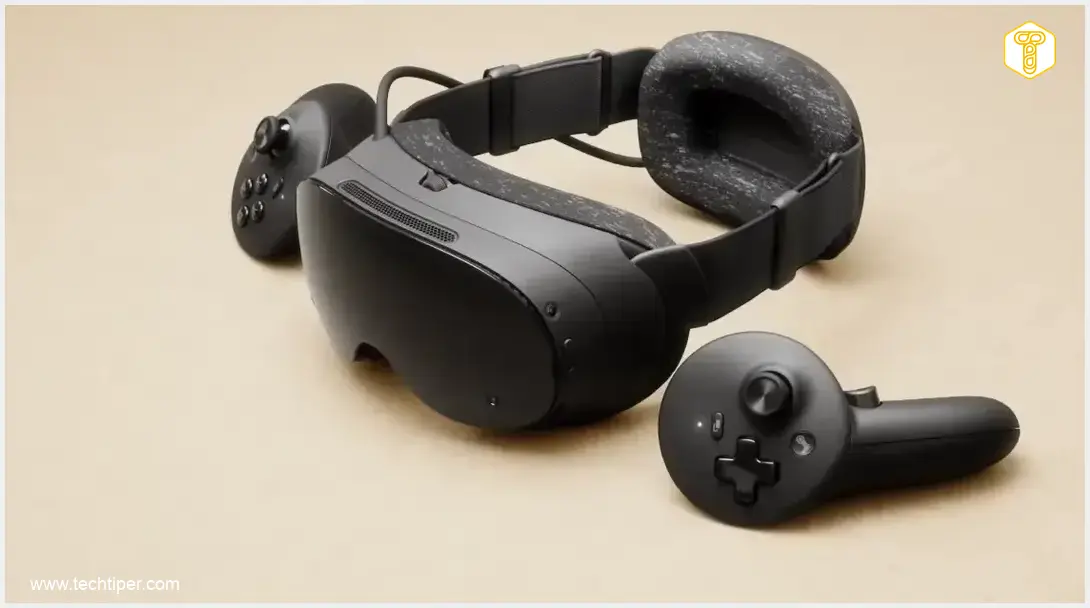
Valve has officially unveiled the pricing for its highly anticipated standalone virtual reality (VR) headset, the Steam Frame. Designed to bring PC VR gaming to a self-contained unit, the Steam Frame aims to expand the reach of Steam’s extensive library of VR titles. While its pricing strategy appears more considered than past hardware endeavors, it still positions the device as a premium product primarily for dedicated enthusiasts rather than a mass-market offering.
Pricing and Configurations
The Steam Frame will be available in two distinct storage configurations:
- 256 GB Model: Expected to retail for approximately $1,135 USD (based on an approximate conversion from its regional pricing).
- 1 TB Model: Priced higher at around $1,387 USD (based on an approximate conversion from its regional pricing).
Both versions of the Steam Frame will include a digital copy of Half-Life: Alyx, a title widely regarded as a benchmark for immersive VR experiences. This inclusion undoubtedly adds significant value, offering immediate access to one of the most acclaimed games in virtual reality.
Compared to the 2019 launch of the complete Valve Index kit, which was initially priced around $1,167 USD (based on approximate conversion), the Steam Frame’s entry-level pricing seems relatively stable, especially when accounting for general inflation over the past few years. This suggests a strategic attempt by Valve to keep the new hardware competitively positioned within its own ecosystem. For more context on regional pricing strategies, you might find our article on Steam’s Regional Pricing Update insightful.
Release Schedule and Functionality
The global launch of the Steam Frame is slated for a date after September 18, 2026. Beyond its primary role in supporting dedicated VR games, the headset boasts the capability to run many standard, “flat” PC games in a cinematic viewing mode, expanding its utility beyond exclusive VR content.
Prospective buyers interested in early access can register for a waiting list until September 17, 2026, at 7:00 PM (UTC time zone for international clarity). The registrants will then be entered into a lottery system.
Competitive Landscape and Market Challenges
Despite Valve’s esteemed brand presence in the gaming world, the Steam Frame enters a VR market that remains decidedly niche and highly competitive. Alternative standalone and tethered VR solutions offer compelling value propositions:
- Meta Quest 3: A popular standalone headset, often retailing for approximately $700 USD.
- PlayStation VR2: A wired headset for consoles, which can also be connected to PCs with additional adapters, typically priced around $460 USD.
The overall VR market has faced headwinds, with Counterpoint Research reporting an 18% decline in global headset shipments over the past year. While Valve’s reputation and the allure of the Steam platform might draw some interest, widespread adoption is heavily dependent on the availability of “must-play” high-budget experiences.
Currently, the landscape of truly transformative VR games is sparse. While titles like Half-Life: Alyx (released in 2020), Beat Saber, SUPERHOT VR, and Horizon: Call of the Mountain (2023) offer engaging experiences, the continuous flow of such flagship content is crucial for driving mainstream appeal. The future of gaming hardware, including VR, is a topic of ongoing speculation, with discussions often extending to upcoming consoles like those explored in PlayStation 6 Price Speculation and Analyst Predictions.

Ultimately, the Steam Frame appears poised to serve the existing VR enthusiast community and potentially attract new users already deeply integrated into the Steam ecosystem. However, overcoming the barriers of high entry cost and a limited library of exclusive, blockbuster titles remains the industry’s primary hurdle in bringing VR to a wider audience.
Frequently Asked Questions (FAQ)
Despite continuous innovation in hardware, the VR market faces several challenges that keep it niche. These include the relatively high cost of entry for premium headsets like the Steam Frame, a persistent lack of a consistent stream of “system-seller” games beyond a few standout titles, and general user adoption hurdles. The market has even seen an 18% decline in global headset shipments recently, according to Counterpoint Research, indicating that current offerings haven’t yet achieved mainstream appeal.
The Steam Frame is positioned as a premium standalone VR headset, with its 256GB model estimated around $1,135 USD and the 1TB model around $1,387 USD. This places it significantly higher than popular alternatives like the Meta Quest 3 (approx. $700 USD) and the PlayStation VR2 (approx. $460 USD). While the Steam Frame offers direct access to the extensive Steam VR library and includes Half-Life: Alyx, its competitors often provide more affordable entry points, appealing to a broader user base despite potentially different feature sets or platform ecosystems.
Half-Life: Alyx is widely celebrated as a defining VR experience due to its high production value, innovative mechanics, compelling storytelling, and exceptional immersion. It showcased the full potential of VR gaming, setting a high bar for future titles. While it remains a benchmark, other notable “must-play” VR games include rhythm-action favorite Beat Saber, the stylish first-person shooter SUPERHOT VR, and the visually stunning Horizon: Call of the Mountain. However, the consistent release of high-budget, “unmissable” experiences like Alyx is crucial for driving wider adoption and sustaining interest in the VR market.
Source: Valve. Opening photo: Valve / press materials
About Post Author
